Comment

Dish of the Week........ In the Gallery

Wednesday at the Barn

Dish of the Week

The Cheese Course

The Cheese Course at Barndiva is the perfect way to spend an afternoon in the gardens with a glass of wine, but we love to  serve it as they do in Europe, after the salad course and just before (or in lieu of) dessert. With due respect to local sourcing we have always searched far and wide when it comes to serving artisan cheeses. It's important to keep age old cheese making traditions alive wherever you find them, and cheese is one of the few things you can enjoy that most truly reflects the taste of the land where an animal has grazed.  A goat cheese by any other name does not taste the same! When we do source locally, we often return to Cowgirl Creamery, who in addition to importing artisan cheeses from all over the world produce their own exquisite selections. Mt. Tam Cheese is a soft cow's milk cheese made from organic milk produced in Marin County.  It has a bloomy rind, a firm buttery texture and is aged about 3 weeks.

Our favorite condiment to eat with cheese is pure honeycomb.  Hector's Honey is produced just a few miles from our restaurant.

In Spring we pair cheese with bright fruit: a slice of kumquat, rhubarb, delicate citrus, and edible flowers. This week Chef lightly poached field rhubarb in a touch of grenadine bitters to help the natural red 'pop' a bit.

We caramelize walnuts to balance the earthiness of the cheese and the tartness of kumquat, rhubarb and citrus. We add, as a final grace note, yellow blue and russet pansies from our garden.

In the Gallery

Manok is a local talent who has been painting in Sonoma for over a decade, but while she truly captures the bucolic heart of the gently rolling landscapes that surround us, it's easy to see traces of a nomadic life that took her from Laos, where she was born, to Paris, where she worked for Kenzo for many years. It's something in the way she can make the most normal forest, field or river feel exotic, using a range of colors imbued with light that brings Turner to mind. Yes, her skies are that remarkable. Layered texture comes from exclusive use of a pallet knife, but the sly sense of humor she brings to the natural order of the universe is, we suspect, all her own. In addition to the work we have on view in the gallery, her work can be seen in Diavolo Restaurant in Geyserville.

Comment

Comment

Dish of the Week .... In the Gallery .... Easter Brunch Menu

Wednesday at the Barn

Dish of the Week

Artichoke Salad

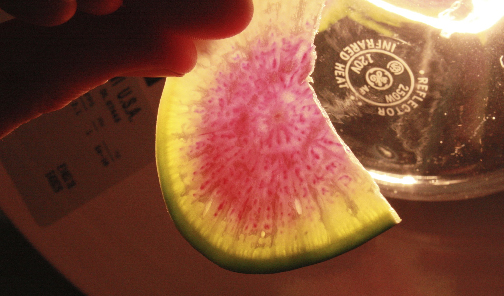
Chef peeled and lightly cooked the artichokes using the French method of Barigoule, which calls for braising with white wine and carrots. When the artichokes were cool, he  sliced and dressed with champagne vinaigrette. Served with thinly sliced watermelon radish, fava beans, navel orange, kumquat, kale flowers, chervil and tarragon, all this salad needed to finish it was a fragrant citrus vinaigrette.

Color is everything in spring after a dull gray winter of rain ~ but color is just the start.  The flavors have to follow through and in this case they do: green and citrus bright, with a gentle bite of semi-bitter radish. The crunchy texture of al dente vegetables is complimented with soft floral notes, and a mellow finish in the meaty chokes.  Sun is out.

In the Gallery

The Bali artist Ketut Kardana meticulously hand draws his extraordinary "Goddess of Knowledge" series from a small hut in the middle of the rice fields above the mountain town of Ubud.

Trained by village elders from the age of eight, he works primarily in palm fiber for his initial sketches, judiciously using Russian inks for delicate color. He normally finishes his work in acrylic, which gallery owners in Ubud  told him tourists prefer.  For the pieces he creates exclusively for Studio Barndiva we have prevailed upon him to stop before the application of any bright color, giving the work the effect of tintype while allowing a greater appreciation of his masterful drawing skills. Matted in archival linen and framed in patina'd hardwood to the artist's specification.

10.5 x 19 and 12 x 21  each $750

Ketut images:

Easter Brunch Menu

all photos and text,  Jil Hales, unless otherwise noted

Comment

Comment

Dish of the Week......In the Gallery

Wednesday at the Barn

Dish of the Week

Tasting Menu, 4th course : Caramelized Lamb Chop with Fiddlehead Ferns, Fava Beans, Morels & Spring Garlic Soubise

Our lamb this week came from Wyland Ranch in Petaluma, sourced from Ritz @ Sonoma Direct. It was grass fed, with a surprisingly mature flavor for early Spring. The secret of a caramelized crust is to heat a dry pan until the first wisp of smoke starts to rise, and only then hit it with the lamb.

First of the Fiddleheads arrived in the kitchen ~ these are local, not the prettiest we've ever seen but the season is too short for beggars to be choosers. Legend has it the best Fiddleheads grow wild in Michigan ~ a bit too far for us but we're dying to know if it's true.

Take the time to peel Favas all the way,  that’s out of the pod AND skin off before blanching. A bit of sugar in the water will hold the color .

Finally, about Morels: suck it up and spend what you need to on the best you can find. They are worth it. Nothing wrong with dried but oh the fresh are where it’s at. Even if you use dried, soak and rinse these babies because they WILL have sand hidden in those crenelations that will ruin one of the most sensual mouthfuls around. Trim bottoms, cold water bath, rinse. Do it again if you're not sure.

We served this 4th course of our tasting menu with a decadent, creamy soubise of spring garlic. Very little of a sauce this rich is needed.  Soubise is a variation of fondue but this one has no cheese or milk. It does have spun butter, because, well, you know.

Tommy paired one of his favorite merlots with the lamb. Paloma is a Napa winery on the summit of Spring Mountain, owned by Barbara and the late Jim Richards.  With only 15 acres under vine their singular focus produces just one wine, an Estate Merlot that The Wine Spectator awarded #1 Wine of  the Year in 2003 (for their '01). "They've been producing since 1994, it's a voluptuous wine,  with an uncanny balance and structure that provides the framework for graceful aging."  Tommy knows we don't go over the hill too often in search of great wine, but when we do, rest assured it's going to be special. The tasting menu changes every week.

In the Gallery

Beautiful, well made and functional are all things we look for ~ as consumers and vendors ~ in a fine piece of furniture.  At the Studio we up the ante even more: we want to know who makes the things we sell which you will use everyday and hopefully come to love. These  pieces are a case in point.

The big fellow below is named Joe Bates. We've known him since he was as old as the little fellow, his son Max. No one knew then, least of all Joe, that someday he would begin the journey to being a master craftsman. Maybe the interest in being at bomber pilot (at age 8 ) indicated an early love of steel? What he always possessed was a dogged determination to get things right, especially those things that take form under his hands. His work, whether in concrete or steel, elevates raw material to the next level; they are clean designs using processes like patination and burnishing, and finishes like specialized waxes and innovative hybrid clear coats.  Working from a studio in Napa where his commission pieces can be seen at some of the highest profile wineries, hotels and restaurants in Wine Country, we  have carried a range of his armoirs, bookcases, fire pits and food pyramids in Studio Barndiva since the day we opened. Bookcases and tables can also be commissioned in a variety of sizes and lengths.

Shown below: Silver Armoire in Patina'd steel and glass $4,800; above, "The Cubby" in steel $2,850. Photography for 'In the Gallery', DP Jaworski, the newest member of our team.

Comment

Comment

Dish of the Week......... Spring Menus....

Wednesday at the Barn

Dish of the Week

Crispy Pork Belly with Arugula Purée, Kumquat, Pickled Red Onion and Quail Egg

I love how Fergus Henderson (The Whole Beast: Nose to Tail Eating) describes the “not quite meat not quite fat” quality of pork belly: “ It’s onomatopoeic ~ belly is like it sounds ~ reassuring, steadying, and splendid to cook due to its fatty nature. It’s not a cut to rush and with that a certain calm is imbued in the belly.”  Of the diner, that’s for sure.

The Pork Belly craze that swept the restaurant world the past few years gave rise to a lot of awkward pairings which either over~played the richness of the cut or tried to disguise it ~ chocolate covered pork belly anyone?  The desire to press PB to reduce the fat isn’t always the answer either, as in doing so you loose the fluffy quality of one layer melting into the next. Why disguise the fatty attraction of the cut ? Just remember a little bit of belly goes a long way and enjoy.  Pork belly makes the most delicious first course.

Ryan’s take on it for dish of the week was to celebrate what we hope is around the corner ~ a glorious spring!  He choose condiments with vibrant colors and bright flavors, but used them with discretion, paying homage to the full, rounded and soul satisfying essence of PB, especially for carnivores of the nose to tail variety.

Kumquats, wonderfully bright and bitter, wake the taste buds up in a way that makes all flavors that come into contact with them all the more distinct.  A citrus fruit the size and shape of an olive, the oval kind we serve raw this time of year has an edible sweet rind. Pairing thinly sliced kumquat with the pickled crunch of tagliatelle of red onion and a smooth peppery green arugula purée was a brilliant way to isolate the richness of the belly while allowing its flavor profile, with hint of maple syrup in the finish, to sing.

Tommy paired the Pork Belly with a 2006 Kerpen Riesling from Wehlener Sonnenuhr,“the Sundial of Wehlener,” Sonnenuhr meaning sundial, Wehlener being the town where the grapes are grown. The vineyard is so named because in 1846 the first man to plant grapes in this part of the Mosel Valley, Jodocus Prüm, painted a giant sundial on the face of the highest cliff of this rocky outcrop, perhaps to celebrate the sheer insanity of trying to grow anything where there was no topsoil and only shards of pure blue slate. His folly was our gain ~ and 200 years on Riesling from this area is one of the finest expressions of terrior in winedom.

Like fois gras, Tommy believes Pork Belly calls for a wine with sweetness and viscosity, and a good bit of acidity to cut through that richness ~ the same reasoning behind Chef’s choice of pickled onion and raw kumquat.  He is especially partial to Rieslings from this part of Germany when they are properly aged, as only then do they begin to develop the interesting aromas that make this varietal especially enticing. It’s called having a petrol nose, what the French call goût de pétrole. Petrol, kerosene and rubber are all aromatic attributes that are highly sought after in a mature Riesling.

Barndiva's Spring Menus

Comment

Comment

Dish of the Week.........Cocktail of the Week...

Wednesday at the Barn

Dish of the Week:

Creekstone Ribeye with Hand-Cut Gnocchi, Spring Vegetables, Tomato Marmalade, Arugula Coulis, Fingerling Potato Chip

We were punch drunk this week with a mouthwatering new cut of steak and the first spring vegetables to come in the kitchen door ~ favas, ramps (wild leek) & stinging nettle!

The secret to keeping the bright color and taste of spring is to blanch vegetables briefly in boiling water, then 'em shock in ice water. However you cook to finish take care to stop at al dente for fullest flavor.

Our potato gnocchi is made with rich saffron orange egg yolks from Early Bird Place with very little flour. Mirroring the cooking process for the vegetables, we poach then cold shock the gnocchi to cook them through before sautéing for color and texture.

As for that steak: We talk a lot about sourcing beef around here. Grazing cattle brings great benefits to the soil, but 9 out of 10 of diners prefer grain fed beef.  Creekstone Farms seems to promise the best of both worlds as the animals are pastured until the last few weeks, when their primary feed changes to grain. It's delicious but the conversation about sourcing continues.

And there’s a good reason Chef Ryan separates the rib ‘eye’ from the cap (calotte) and serves them side by side. Ribeye is part of a long muscle that runs from the shoulder to the loin and as such has a different fat ration depending on where each cut is made. By separating the eye from the cap (which have the same flavor profile, though their different textures subtly affect taste) we are able to give guests a perfect portion of both.

The well-seasoned ribeye is pan fried in grapeseed oil but any oil with a high smoke point will do. Yes, we baste in butter with a sprig of fresh rosemary just before removing the steak to rest.

Spring favas, asparagus, and herb studded gnocchi were piled on top of the eye which rested in a vibrant wild arugula coulis. The beautifully marbled cap was paired with a quenelle of last summer’s tomato marmalade and a single fingerling potato chip.

The tomato marmalade, like much of what we preserved last summer, is starting to run out. Just in time for spring, when we start to do it all again.

♦ ♦ ♦

Cocktail of the Week

¡Fantômas!

The first dinner menu of spring continued to take the lion's share of our attention last week, as we waited for the rains to stop long enough to get our edible flowers and herbs into the ground. Meanwhile, the bar has been quietly crafting away, with Adam and Sam merry as mice on a busman’s holiday.  They previewed the first of the new cocktails for me this week, using two of the hardest spirits to finesse…tequila and pisco. The tequila cocktail is stunning, with lots of lovely bitter notes around a big pink heart of grapefruit citrus. The cocktail is finished with a mist of rosewater,  homage to the drink's namesake, Fantômas, the world's first modern villain.

Ingredients: Grapefruit syrup, fresh grapefruit juice, Amaro Nonino, Aperol, hint of fresh lime mist of rosewater (a small stainless mister is a great investment)

FYI: if you want the recipe, drop us an email and we’d be happy to oblige.

Comment

Comment

Chef Ryan's Mini Quail Egg Tartine

Dish of the Week There's a single moment in any great meal when you hit the sweet spot and get all elements you're loving on the plate together in one perfect mouthful.  Our Quail Egg Tartine was the perfect 'breakfast' moment writ large: fried egg, perfect toast, buttery tomato, salty balcony crunch. The lightly  herbal and  floral notes of cilantro and Rapini kept the rich umami ingredients distinct, until  the last instant, when the creaminess of the egg yolk brought it all home in a Pigs & Pinot moment everyone who experienced it described as  "pure bliss."

Comment

Comment

Charlie Palmer's Pigs & Pinot ~ A Healdsburg Favorite

OK, so Dish of the Week was actually Bite of the Week ~ a Proustian breakfast moment Chef served to 300 Friday night at Pigs & Pinot, Charlie Palmer’s sold-out signature food event that takes over Healdsburg in mid-March. For those of you who grew up in the age of Top Chef ad infinitum and innumerable  foodzines and foodblogs, it may be hard to believe that once upon a time the cult of the celebrity chef didn’t exist. Charlie Palmer didn’t invent the concept, but he was one of the first American chefs to draw crowds to his restaurant Aureole in NYC by sheer virtue of his talent alone.  Back then (no, I wasn't going to say "in the good old days”) reputations could only be built by reviews and word of mouth. Palmer generated a great deal of both. In the years since he has built a mini-empire of restaurants and hotels that rivals Nobu’s in size if not influence. What Nobu is to black cod (basically on the back of one recipe), Charlie is to pork (significantly, the entire animal).
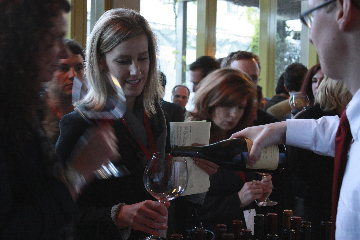
I like Pigs & Pinot. It supports a number of worthy charities while functioning as it was primarily intended ~ a two day publicity venture for Palmer and Co. What I like best about it is the classy way it goes about making the connection between food and wine while strengthening a good swath of the local economy. Even as he burnishes his own brand, Palmer manages to advance a quality driven definition of the word sustainable in an age where even the best restaurants are struggling with the temptation to fudge standards in order to survive. Any week of the year around here you can throw a stick and hit a food or wine event; few of them put the whole animal in focus to the extent Pigs & Pinot does. This is a message not lost on the 500 ticket holders that flooded the Hotel Healdsburg 1 & 2 this past weekend, with reportedly double that number on a wait list every year.  The remarkable world-class selection of Pinots guests get to taste are the sizzle, but make no mistake, the meat of this event ~ literally and figuratively ~ is the whole hog.

Most of the press Palmer generates focuses on Saturday, when “celebrity” Chefs from all over the country land in Healdsburg to flex their culinary muscle. But if you live here the real fun is watching the local talent go head to head on Friday night. Though every one of these participating local Chefs will tell you it's not a competition, that they are just ‘doing their thing,’ with few exceptions each secretly hopes theirs is the best pork mouthful of the night. And why shouldn’t they?  Our Chefs are a remarkably convivial group, but the fun at these events is upping your game as you coolly hang out in the hood with guys you compete with on a daily basis. The fact that there is an abundance of talent to go with a healthy dose of competition is what makes Healdsburg a dining Mecca. That nobody cops to being competitive is just part of the charm of living in the country.

In this respect Ryan is no exception, except to the extent that his competitive drive comes more from pride, than ego. He always defers when appreciative diners  ask him to come out and meet them, and while he's forthcoming with the press he never goes in search of them either. Quite the contrary.  Yet he’ll cook a dish over and over again to get it spot on, then think about it some more before Pancho and the team are put through their paces so it's served consistently the same way, every time, for each and every diner. As chuffed as he was when he won the Top Chef competition at Taste of Sonoma two years ago, he couldn’t wait to get out of there the minute it was over. I  suspect that when (though no fault of his own) he couldn’t defend his title this year, his worry wasn’t what people would think when he didn’t show so much as missing an opportunity to go head to head again with another talented Sonoma County Chef.

Americans have a funny relationship with what is, culturally, our inherently competitive nature. Because we always seem to equate success with money (or its corollary, fame) we are congenitally guilty of making the mistake that whoever has the most marbles when the bell rings has “won.”  I’d go as far as to say that our obsession with money and fame ~ no matter how many ‘unhappy’ rich and famous people are paraded before us ~ borders on being a national illness. The mistake here, to my mind, isn’t so much that we haven’t learned money and fame can’t engender happiness (which deep down we probably know) it’s overrating the ephemeral entity of happiness in the first place. Between happiness and true satisfaction I'll take satisfaction any day of the week. Happiness is a beautiful vagrant, its perfume a scent in the air, music that lifts your heart, the touch of someone you love. All good, but for it even to exist it needs someone to blend the perfume, write the music, become the person you love. True accomplishment, whether building character or just a better mousetrap, is complex, and while luck can play a role it's not a sustaining ingredient the way a combination of passion and patience is. The satisfaction that comes from accomplishment ~ whether it brings you happiness or not ~ resides in the way something is made,  how long you spend refining an idea, how many times you paint over a figure before its heart ~ of joy or darkness ~ appears.

Until six years ago when I took on my latest career incarnation as “restaurateur,” I managed to fashion my life in such a way that whether I succeeded or failed (and I did a lot of both) it was always on my own terms.  Even as my game changed over the years, from academia to photography and journalism, ultimately to design, I mostly avoided the world’s judgment in a way that allowed me to work on the quality of what I was producing without fear an audience of strangers wouldn’t like it. Many people don’t see a problem basing their success on something that’s been copied or stolen from its original source. Maybe that's why the world is filled with such derivative crap.

But food doesn’t wait for that certain someone who understands your aesthetic to fall in love and take it home. What takes years to learn and untold hours to source and cook is consumed in the span of a few minutes. Wham, Bam, the verdict is in.  In the past if someone did not like what I created I could console myself that it "just wasn’t to their taste”, or take the time to improve it. With food every dish and every meal must suit a diners taste each and every time…. because with food the customer is always right. That Ryan knows this and works at making our food ‘right’ for every customer, yet does so in a way where he is consistently challenging himself, pushing his own creative boundaries, is remarkable to me.

As for who actually produced the best pork inspired dish last Friday, while I did not taste everything (an understatement considering how much incredible food was being offered) Dino Bugica’s (Diavolo) black sausage was about the best I’ve ever eaten. This man’s talent in all things charcuterie is a wonder.  Ari Rosen (Scopa) had the most beautifully roasted whole baby pig which, in his inimitable style, he served simply. Cyrus’ Chinese bun was perfect respite just at the moment I was suffering from serious pork fatigue. I did not taste Charlie’s dish ~ his lines were moving at a snail’s pace ~ but the burnished pork bellies turning on the spit behind him in the central courtyard looked utterly mouth-watering.

It was not until I returned to our station that I fully registered how our contribution was going over. Until that moment I hadn't put Barndiva into the competitive mix I had running in my brain, which made it all the more delightful when I saw the faces on the crowds inundating our station. This was a different set of folks than we’d had during the first hour of the evening, when everyone was moving through the rooms tasting things for the first time. While many had returned hoping for another taste, most were new faces, that all opened with the same heartwarming gambit: “I heard from everyone this was the best thing here tonight.”

Very cool, right? But the most enjoyable moment of the night was still to come. As I stood watching I was approached by a couple from San Francisco who had returned to our station for “the final bite of the night.”  I had never met them before and they had never eaten at Barndiva, though the woman  ~ dark haired, very pretty ~ said she read the journal. They were extremely knowledgeable about food ~ off to Chicago in a few weeks “just to eat ” ~ but it wasn’t their erudition on all things culinary that struck me as the conversation moved swiftly from our favorite SF haunts through greatest meals ever, to a surprisingly honest appraisal of why eating out had come to comprise “some of the best moments” of their lives.  Though they were obviously passionate about food, they weren’t precious about what they ate. While the room and the ambiance of a restaurant mattered, connecting with informed but not overbearing servers mattered a great deal more.   Though they weren’t in the business they had, through their travels, begun to understand how hard good restaurants had to work to get it right, especially when it came to sourcing. They were, in short, critical but sympathetic. Standing there in the beautiful din of Charlie’s world the possibility suddenly occurred to me that along with the age of the celebrity chef we may be entering the age of the enlightened diner, people who see their patronage as team support, as crucial to the game as the crowds in a grandstand. Dining out is a collaborative experience; diners should be honestly invested in its outcome. Because it's true, progressive diners ~ like the best fans ~ are  the first ones to tell you when you make a bad play (or dish) but it's their cheers, when they come, that are the ones you most long to hear.

Comment

1 Comment

Winter Fruit Salad

Dish of the Week:

Bright jewel colors in the dead of winter are nothing short of magical and Chef Ryan's Winter Fruit Salad with Honeycomb is a case in point.  Check it out: Navel Oranges, Blood Oranges, Page Mandarins, Ruby Red Grapefruit, Fuji Green Apple, chervil, chive, edible pansies, rapini, radish,  & last but not least, slivered kumquats from Chef's own backyard tree.  Interesting combinations result as the taste buds pick out fruity, floral and fresh green notes in the dish.

The dish also celebrates Chef's deft hand with Gastriques ~ sweet or savory reductions which are the result of sugar, often combined with fruit, caramelized until nutty brown, then cut with either vinegar or wine.  Despite their reliance on sugar as a catalyst, gastriques are often savory for as sugar cooks, its sweetness subsides.

Most bistro dishes are a result of the classic line up: Marbled cuts of meat using salt and herbs to heighten flavor, wine to mellow, starch to carry the sauce.  But the ultimate brightness in many of Ryan's classic French country dishes comes from his love and use of vinegar.  Two gastriques here rely upon vinegar ~ the mandarin and the apple ~ to bring a brighter nose and sharper initial taste before they mellow on the palette.

When we can, we serve honeycomb with our artisan cheese plates to remind folks honey doesn't start out refined in a jar.  The honeycomb served with this fruit salad comes from Hector's here in Sonoma County.

Bees have been much on our mind as of late, as the mysterious 4 year-old crisis of disappearing honeybees deepens.  While a new heavy bee die-off this winter may be the result of extreme weather, no one really knows yet what's causing a worldwide hive collapse.  Pesticides surely play a role, but sometimes I think ~ between CAFOs and suburbs ~ bees have just had enough.  Say it isn't so.

all photos and text, Jil Hales, unless noted otherwise.

1 Comment

Comment

In the Fields with Friends

Barrel tasting weekends are a mixed blessing for those of us that depend upon the food and wine that has made Sonoma County a gold standard in destination travel. On the one hand we are thankful for the tribes of wine lovers that infiltrate the area for these events, as they fill our waning winter coffers. On the other, it’s hard to ignore the fact that by mid-day many of them begin to weave and talk in extremely loud voices. How and when those not staying in town will find their way home becomes a real concern.

But my mixed feelings about Passport and Barrel Tasting weekends don’t only come down to a dichotomy that pits revenue against safety. I’ve heard it said with increasing frequency that’s it a good thing more and more people are staying in town to focus on tasting rooms they can walk to. But while that thought ~ especially for those groups that do not have designated drivers ~ makes sense, it runs counter to the initial spirit of these events which was to bring wine lovers into the countryside where they could connect a product they love with the place it is grown and the people who make it.

If you ventured to the last stretch of West Dry Creek in search of wine to taste this past weekend, just before the bridge and  bend in the road that leads to Preston of Dry Creek,  you would  have come upon a vineyard that made your journey not a detour but a main event. Adjacent to fields where pigs and chickens roam and fertilize  some of the oldest vines in the valley, guarded over by Guisippe, the Preston's magnificent sheep dog, a flock of new lambs took their first baby steps.

I’ve written about this family farm and vineyard often in the past, not simply because they are dear friends, but because they are working toward a bio-dynamic definition of farming that any fool can see should go hand in hand with the growing of premium grapes. When Lou and Susan pulled a great many of their vines out years ago to make more room for hedgerows and crops, revenue focused vintner’s shook their heads. The value of the land was in yield of a crop that made the most money, right? Depends on how you define that ephemeral word value.

Preston, Quivira, and forward thinking wineries like them have built large and loyal followings. They have started and continue to happily stir conversations about how food is grown and distributed, and what diversity can bring, on so many levels, to the monoculture of just growing grapes.

On Saturday I was struck by the various stages the baby lambs were going through in order to survive their first perilous days. Some were still sunk into the grass, huddled right where they had been birthed, weakly taking stock of their new surroundings. Others gamely tried to follow mum and the source of food, on legs that kept failing to hold them upright, while still others, only a few hours older, gamboled around with a joy of movement that was a blessing to behold. With the exception of the ones that did not have the strength to walk from birth, the lambs followed an age old journey all of us make ~ taking baby steps before they ran. There’s a metaphor in here somewhere I kept thinking, for all the vineyard owners who look at the rich magnificent balance the Preston’s have managed to achieve through the dint of mindful hard work, and think “sure, I’d like for my vineyards to look like that, but I don’t know where to start.” Unlike sheep, we should be able to figure out what happens next if we don't take those first wobbly steps, no matter how unprepared we think we are.

To read more about the Preston's and all their multifaceted endeavors, check out their beautiful new website and visit their blog.

Comment

Comment

Smoked Salmon

Dish of the Week:

Smoked Salmon Salad

Smoked salmon has been a staple in Russian and Scandinavian diets for centuries, long before the world learned how good Omega 3s are for us.  Like preserving, curing relies upon traditional techniques that extend our enjoyment of nature’s bounty, which is always a good thing.

Chef Ryan’s Cold Smoked Salmon is a dish of unusual color for the middle of winter: radish, mandarins, avocado, sunchoke chips, pickled onions, rapini, chervil, chives. As a delicious nod to the dish’s Russian tradition, Chef included perfect cubes of cooked potato and a luxurious caviar crème fraîche dressing.

There are two stages to preserving salmon, which go hand in hand: brining and smoking.  Brining draws water and moisture out of the fish, but care must be taken so the salt used in the brining process does not overwhelm the taste of the sea. By the same token, spices want to enhance, not interfere, with salmon’s hallmark flavor profile, which is sweet and rich.

Ryan prefers cold smoking to hot because as the temp never exceeds 90 degrees F, the fish cooks while retaining the translucent pliant texture it had raw.  Cold smoked salmon is also easier to slice.

Chef made two dressings for the salad which ingeniously played off one another: a sharp citrus vinaigrette (fresh squeezed lemon, orange, grapefruit and lime juice, virgin olive oil, apple vinegar, salt) followed by a languorous trail of caviar crème fraîche.  The combination of the two brought out disparate but savory elements ~ from the sharpness of the pickled onion, through the green notes of chervil and chive, to the sweet citrus of mandarin.  As for the meeting of caviar, crème fraîche and potato, it would have brought a smile to any Czar’s face.  Or serfs like us.

I love salmon. But the truth is, we’re coming to the end of it.  These days sustainably harvested salmon is a very rare treat.  Alaskan troll-caught and California rod and reel, when you can find them, are the gold standard ‘wild’ alternatives to Loch Duart farmed.  Next week we begin a discussion about sourcing fish mindfully.  It’s a conversation all Chefs who are passionate about food needs to participate in, sooner rather than later.

Comment

Comment

Barndiva ~ In the News

Because we always keep schtum about it, you'd probably be amazed at the number of famous people who have wandered into (and often stumbled out of) Barndiva over the years.If discretion is not the better form of valour, it's up right up there. But when a famous person mentions you on national TV in the same sentence as "one of the best restaurants I've ever been to" it's okay to out their visit. Before she came to brunch on Oscar Sunday we're embarrassed to admit some of us didn't even know who Chelsea Handler was. Now we do and we think you should too.

Why? Because it turns out that besides having very good taste in restaurants, Chelsea Handler is very, very funny. Cue Dorothy Parker, this bestselling author and stand up comic manages to project a genuine yet deeply sardonic point of view rare in the otherwise mind numbing world of talk shows ~ check out her interview with Brit singer Adele if you don't believe us. As for Ed McMahon being reincarnated as Chewy the Mexican midget...Johnny would have loved it.

Click here to watch.

Chelsea Handler Hearts Barndiva

Lukka Feldman and his Barndiva restaurant made quite the impression on comedian Chelsea Handler.

While visiting San Francisco last week, the best-selling author and star of E! Network’s “Chelsea Lately,” trekked up to Healdsburg for a Sunday brunch. She said she’d never been to Sonoma County, but went to Barndiva at the behest of her friends. So taken was she by Lukka and the food, that she gushed about it on her hit late-night talk show.

“I wanna give a quick shout-out to my new friend Lukka who runs the Barndiva which is in Healdsburg, California. So if you’re ever in Northern California and you want a really really good meal, it’s one of the best restaurants I’ve ever been to. So there.” After the applause subsided, she added, “And I did pay for my meal, in case anyone was wondering.”

Ms. Handler doesn’t often give on-air shout-outs, so it was that much more remarkable.

So what did the young restaurateur have to say about all of this? “I was shocked and flattered,” says Lukka. “She presumably eats at world-class restaurants all the time. So for her to say that about Barndiva, well, that was quite an honor.”

Scott Keneally for The Press Democrat

Comment

Comment

Oscars ~ In Memory

There was a lot of talk Monday morning about the efficacy of the Oscars, much of it relevant (starting with too many Best Picture nominations and hosts that couldn't hold the attention of each other, much less millions of cinema lovers around the world). We continue to believe it’s important to celebrate the arts ~ and great to do so together. There is something wonderful that happens in a room that breaks out in spontaneous applause. Even better, one where strangers get to know one another while eating and drinking with genuine enjoyment.

As we head into a world where it’s getting harder and harder to differentiate quality and singular artistic vision from products that have nothing driving them but the hope they generate revenue by hitting the lowest common denominators, it’s important to set the bar as high as we can. And to stop for a moment to acknowledge and enjoy when a fellow human being sails over it. RIP to all the singular artists that died last year, but a special call out to two that touched our lives profoundly.

Claude
Claude Chabrol, director 1930-2010


Pete_post
Pete Postlethwaite, actor 1946-2011


Comment

Comment

Barndiva's 6th Annual Oscars dinner party

The Fighter: Raw Course

Chiogga Beet Tartar, Caviar Moussaline, Mustard Vinaigrette, Sunchoke Chips

The dish we paired with The Fighter was meant to be raw and bloody ~ though the ‘blood’ came from a vibrant beet tartar whose magnificent color was spiked with a bit of vinegar.  It was topped with a moussaline of whipped crème fraîche, a dollop of caviar, and a wreath of baby sunchoke chips.  Texturally, while the beets and sunchoke chips initially tasted very different, the earthy flavor profiles of both root vegetables played in concert when paired with the creamy moussaline and salty caviar.

Black Swan: Salad Course Butter Lettuce Salad, Ruby Red Grapefruit, Meyer Lemon, Virgin Olive Oil, Radish

The idea behind serving a spare green salad to honor a movie about starving ballerinas started as a joke.  Then Chef saw Black Swan and was actually incredible moved by Natalie Portman’s beauty and elegance.  With it’s ruffle of butter lettuce, sharp crimson edge of radish, and delicate segments of ruby red grapefruit, the salad, finished with champagne vinaigrette and a shower of flowering rapini, was indeed a visual ballet of color and form.  Delicious as well.

True Grit: Fire Course Veal Chop, Boulangère Potatoes, Golden Chanterelle Mushroom, Pickled Pearl Onion

Back in the day, when people still cooked on the hearth, small town bakeries were often used by villagers to cook their evening meal in the still warm wood fired ovens once the bread run was finished.  There wasn’t a lot of heat left and space was always at a premium ~ but I’m guessing some wonderful rustic recipes came out of this unique and very communal way of cooking.  The story behind Boulangère potatoes was simple: meats were put on the top shelf with sliced potatoes beneath them, the better to catch the delicious meat drippings.

Ryan’s homage to the dish couldn’t involve a bread oven.  But if you took your eyes away from the screen on Oscar night and closed them, it was easy to taste the inspiration.  His savory layer cake of thinly shaved potatoes was saturated in dark stock that dripped down flavoring the potatoes during the baking process.  Served alongside big juicy veal chops from milk and grass-fed free range calves, this was haute campfire with True Grit.  The veal was sourced from Sonoma Direct, where Ritz Guggiana and his cookbook-writing daughter Marissa (Primal Cuts) find some of the most delicious ethically sustainable animals in the county.

Toy Story 3: Sweet Course 3 flavors of Bon Bons

Opps.  While the Journal’s photographer clearly remembers devouring the Toy Story 3 Bon Bon course just as Best Picture was announced, images of it clearly did not make it into the camera.  The plate was a riot of color ~ with sprinkles, roasted coconut and almond flakes covering dark, milk and white chocolate Bon Bons filled with passion fruit, vanilla and crème fraîche ice cream.  The good news is that the Bon Bons above are equally delicious and better yet, available often on our regular dessert menu.

Comment

Comment

Blonde Frisée Salad

Dish of the Week:

Blonde Frisée Salad with Warm Garlic Crouton, Bacon, Pecorino, Hen Egg & Chives

Bistro classics have enduring appeal, in part because of the virtuoso way they balance the rich comfort of full-flavored cuts of meat with the bright flavors of vinegar or wine.  Taking a classic dish and updating it with panache is something Chef loves to do, and this salad is no exception.

The addition of crème fraîche to the vinaigrette is not traditional but it refines the connection between the meaty satisfaction of the lardons and the bracing clarity of vinegar.  The salad is typically made with Frisée, aka frilly endive, which belongs to the chicory family.  This often maligned salad green has a lot going for it when picked young and prepped with skill.  A creamy vinaigrette clings to Frisée’s frilly edges like no other salad green.  The blonde variety we use, soft and peppery in flavor, has a wonderful crunch.  Other ingredients Chef Ryan incorporates to elevate the dish to an elegant dinner salad ~ without losing its essential bacon and eggs appeal ~ is a handful of mache, finely diced red onion, fresh chives, and a shaving of dry grated pecorino (the kind with lovely salt crystals).

A softer loaf for your croutons will still give you the desired crunch without tearing at the roof of your mouth.  All home chefs have their own methods of producing a crouton that has the requisite taste of garlic ~ only rule is to try and avoid the bitterness burnt garlic imparts.  At Barndiva, as we make garlic confit almost daily for other dishes, we save the olive oil, fragrant with garlic, for our croutons.

There are two different cuts of Applewood smoked bacon in the salad ~ a thick dice, cooked slowly to melt the fat revealing the fullness of the pork belly, and thin strips of crispy grilled ‘breakfast’ bacon.

These highly addictive pork nuggets are mixed into the salad along with the croutons, while the strip of bacon is strategically placed alongside the fried hen egg, perfect for dipping, triggering that classic bistro moment when the yolk breaks and a golden river flows through the dressed greens. All photos Jil Hales, unless otherwise noted.

Comment

Comment

Studio Barndiva ~ In the Gallery

Hands down, the  best gift you could give this year is a framed card collection from the early 1900's, unique to Studio Barndiva. Encyclopedic in scope, these beautiful cards reveal fascinating details on a variety of subjects. For that bicycle - bird - flower - horse - butterfly -fish- scientific invention- garden- or even old car- lover in your house, this is a great gift. Framed in-house in 2 panes of UV glass, the better to read the fascinating descriptions on the backside! Collections start at $295.

How To Make Your Own Chicken Coop, circa 1923 

Comment

Comment

Sommelier Tommy DeBiase's 2009 Pinot

The bottling and release of our Sommelier Tommy DeBiase's 2009 Pinot was cause for celebration around Barndiva last week. We love it when we can make a real connection between food and wine, and it doesn't get better when we can do that and ALSO celebrate one of our own. This is the third year Tommy has been making wines with Fritschen grapes. Fritschen VIneyards is located on Eastside Road across the river from the old William Selyem crown. It is also a farm where some of our finest lamb is raised (as well as olives brined on the branch that we serve with our whole roasted baby poussin).

The winemaker's notes read: "Old vines grown on 36 degree steep rocky hillsides, result in low yields (only 1.5 tons per acre). Lots of minerality and crispness with Bing Cherry and Pomegranate fruit, with a structure that has both bright acidity and supple tannin."

DeBiase 2009 Fritschen Vineyards Pinot Noir, by the bottle and by the glass, is now available in the lounge.

Comment